Tree Healthcare & Sick Tree Diagnosis in Fort Worth, TX


Is your tree declining, losing leaves, developing dead branches, or simply not looking right? A declining tree doesn't automatically need to be removed. Case Tree Service provides tree health assessments from an ISA Certified Arborist (TX-5220A) to identify what is stressing the tree, determine whether it can reasonably be saved, and recommend treatment only when it is appropriate.

Is Something Wrong With Your Tree?
If your tree is losing leaves, developing dead branches, changing color, thinning out, or simply doesn’t look as healthy as it used to, there may be an underlying issue worth investigating. Tree decline can be caused by many different things, including drought stress, overwatering, compacted soil, root problems, insects, disease, poor planting depth, construction damage, or a combination of several factors.
At Case Tree Service, we focus on finding the cause before recommending a treatment. An ISA Certified Arborist can evaluate the tree, surrounding soil, root zone, watering conditions, visible symptoms, and overall site conditions to determine what may be contributing to the problem.
Not every unhealthy-looking tree needs to be removed, and not every struggling tree needs fertilizer or pesticide. Our goal is to identify what is actually happening, explain the realistic options, and determine whether the tree can reasonably recover.


Symptoms to look out for and what may cause them
Nonprofessional self-diagnosis and treatment is not recommended. An improper course of action can cause irreversible damage. These are simplified, generalized examples.
Yellowing Leaves
Yellow leaves can be caused by watering problems, poor drainage, nutrient availability, root stress, soil conditions, disease, or other environmental issues. The location and pattern of yellowing can help narrow down the cause.
Brown or Scorched Leaves
Browning leaf edges or scorched foliage may point to heat stress, drought, excessive salts, root damage, irrigation issues, or certain diseases. The tree’s overall site conditions matter just as much as the leaves themselves.
Dead Branches or Canopy Dieback
Dead limbs, thinning foliage, or dieback near the top of the canopy can indicate significant stress. Possible causes include root problems, vascular disruption, pests, disease, drought, or construction damage.
Early Leaf Drop
A tree dropping leaves earlier than normal may be responding to stress. Heat, drought, root-zone problems, disease, insects, or changes in watering can all contribute.
Thinning Canopy or Poor Growth
A sparse canopy, smaller leaves, or limited new growth can be signs that a tree is struggling to support itself. Compacted soil, restricted roots, poor planting, drainage issues, or chronic stress may be involved.
Bark Damage, Cracks, or Cankers
Missing bark, cracks, sunken areas, wounds, or unusual growths on the trunk and branches can affect a tree’s ability to move water and nutrients and may also create entry points for decay or pests.
Mushrooms or Fungal Growth
Mushrooms growing near the trunk or roots do not always mean a tree is unsafe, but some fungi can be associated with decaying wood or roots. The type of growth and where it appears should be evaluated in context.
Insects, Holes, or Sawdust-Like Material
Exit holes, boring dust, unusual insects, sticky residue, or abnormal leaf damage may indicate pest activity. Proper identification matters because not every insect seen on a tree requires treatment.
A Newly Planted Tree That Is Struggling
Young trees can decline from improper planting depth, limited root development, overwatering, underwatering, compacted soil, poor drainage, or root-ball issues. Catching these problems early often gives the tree a better chance of establishing.
Seeing one of these symptoms does not automatically mean your tree is dying. The goal is to identify the underlying cause before deciding whether treatment, monitoring, corrective care, or removal is appropriate.


Can Your Tree Be Saved?
A tree that looks unhealthy is not automatically a lost cause. Many trees decline because of problems that can sometimes be corrected or managed, such as improper watering, compacted soil, root stress, poor drainage, planting issues, nutrient imbalances, insect activity, disease, or environmental stress. The key is figuring out what is actually causing the decline before deciding whether treatment is worthwhile.
When we evaluate a struggling tree, we look at the whole picture rather than focusing on a single symptom. Canopy density, dieback, leaf condition, trunk and bark health, root-zone conditions, soil, watering history, structural defects, pest or disease symptoms, and the tree’s species and overall vigor can all help determine whether the tree still has a realistic chance to recover.
Some trees may benefit from corrective care, changes to watering, soil or root-zone improvements, pruning, pest management, or simply monitoring over time. Others may be too severely damaged, structurally compromised, or far enough into decline that removal is the safer or more practical recommendation.
At Case Tree Service, our goal is not to sell a treatment or push a removal. We want to understand what is happening, explain the condition of the tree clearly, and give you a realistic recommendation based on its health, structure, site conditions, and likelihood of recovery.


If your tree is declining, the first question should not be
“How do we treat it?” or “Should we remove it?” — it should be
“What is causing the problem?”
How We Diagnose a Declining Tree
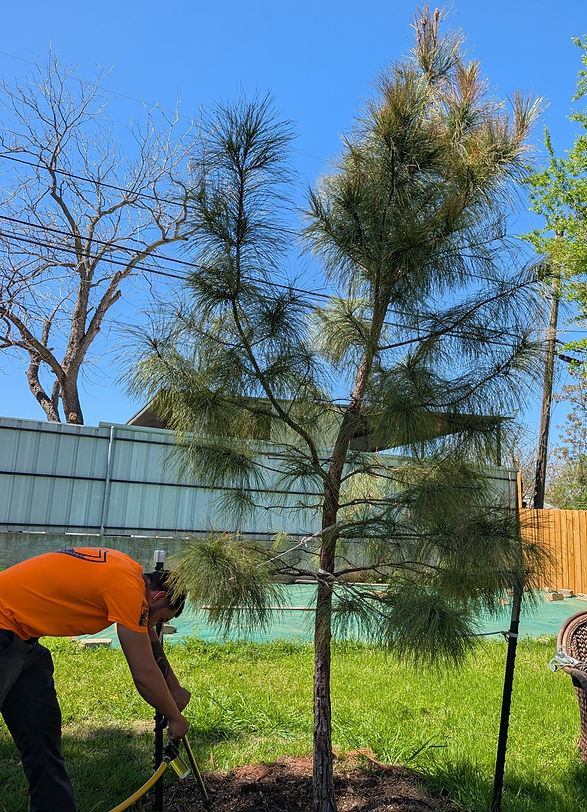
Here is a real diagnosis we have completed on a newly planted tree, along with steps we are taking to treating it. This cedar elm (Ulmus crassifolia) was planted in a newly constructed RV park in Fort Worth, TX. It is showing several symptoms that could lead to future problems, so taking no action would mean gambling with the tree's long-term health. When multiple signs or symptoms are present, one of the most difficult parts of diagnosis is avoiding a premature conclusion based off of only a few observations. We have to evaluate the full data before making an accurate assessment.
1.) Tree and Canopy Inspection
We first inspect leaf color and patterns, total canopy density, dieback throughout the tree, previous wounds, decay present in the tree, growth patterns, and branch structure. At every stage of the diagnostic process, we consider the tree species and recent weather conditions because both can significantly influence what we observe.


Symptoms here: General canopy chlorosis, uneven/patchy yellowing, marginal chlorosis
marginal leaf scorch/necrosis, leaf-tip burn, mottled foliage color, some leaf curling/cupping, thin/sparse canopy, twig/branch-tip dieback, and upper-crown decline
Overall premature stress appearance — the combination of yellowing, scorch, thinning, and dieback makes the tree look like it is entering decline rather than simply showing one isolated foliar symptom
2.) Root & Root-Flare Inspection
We inspect whether the root flare is exposed or buried, the available root area and any restrictions, planting depth, girdling or damaged roots, impacts or damage within the expected root zone, and other root stressors.

With the root flare now exposed, we see no immediate damage. The surrounding area does not show a high likelihood of impact or construction damage. Because the tree is less than a a year old, excessive fertilizer salts are also a concern; high salt concentrations can injure developing and reduce their ability to take up water.
3.) Soil & Site Conditions
Evaluating the soil and surrounding site is one of the most important parts of diagnosing a tree that is declining. Before adjusting nutrients or diagnosing a nutrient deficiency, a soil test is strongly recommended. If laboratory soil testing is not performed, we can also use a calibrated pH meter to evaluate soil acidity or alkalinity. This can help identify conditions that may be limiting nutrient availability. Site conditions and site history are very important. We check for previous herbicide use, recent construction, soil compaction, and other disturbances that may have affected the root zone.

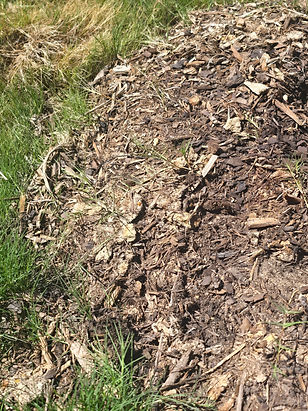
Recent construction of the concrete lots likely compacted the area surrounding the planting hole, lowering root growth potential. As the canopy continues to grow, the root structure must expand with it to support increasing water and nutrient demands. The soil test showed an average pH is 8.1. This is highly alkaline and can reduce the availability of iron and other nutrients to the tree. Cracking of the surrounding soil is noted.
4.) Watering & Environmental Stress
Trees can show stress when their water needs aren’t being met or when extreme heat, drought, wind, reflected heat, or sudden weather changes increase moisture demand. Reviewing watering habits alongside recent environmental conditions helps us determine whether the tree is experiencing temporary stress or a longer-term decline.
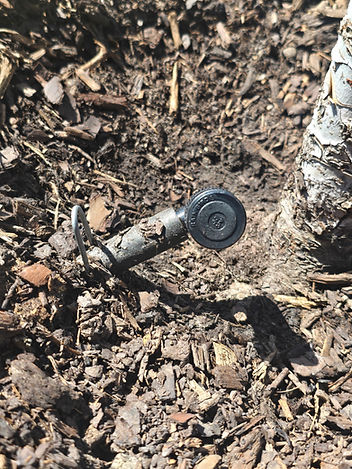

The photos show mulch kept away from the trunk, approximately three inches high, along with an irrigation bubbler capable of supplying water directly to the root ball. Irrigation is scheduled for early morning, allowing water to move into the soil before daytime temperatures increase evaporation. At the time of diagnosis, temperatures had exceeded 100°F for approximately 10 consecutive days, with low humidity. The tree was receiving about 10 gallons of water per week.
5.) Pests and Diseases
In many declining trees, insects and diseases are secondary causal agents—they take advantage of a tree that has already been weakened by drought, root problems, poor planting, compaction, or other environmental stress. During diagnosis, we look for signs of pests and pathogens while also asking what may have made the tree vulnerable in the first place. Some pests and diseases can be primary problems, so identifying the exact cause is important before recommending treatment.

The staining and moisture visible on the trunk in this photo are consistent with bacterial wetwood, also called slime flux. It develops when bacteria colonize internal wood and produce gases and fluid that can be forced out through cracks or wounds in the bark. The resulting seepage may darken the trunk and sometimes have a sour odor.
Bacterial wetwood is often more of a symptom of internal stress than the main cause of decline. In many cases, the tree can continue living with it for years. Treatment usually focuses on reducing the underlying stresses affecting the tree—such as drought, root injury, compaction, or poor growing conditions—rather than trying to treat the bacteria itself.
6.) Testing When Needed
When visual symptoms and site conditions aren’t enough to confirm the cause, additional testing can help narrow the diagnosis. This may include laboratory testing for diseases such as oak wilt or anthracnose, as well as soil testing to evaluate pH, salinity, nutrient availability, and other conditions that may be contributing to decline. Testing helps us avoid guessing and makes sure any treatment recommendation is based on evidence rather than symptoms alone.

Our Recommended Approach and Diagnostic Conclusion
Because the primary issue appeared to be environmental and root-zone stress, our recommendations focused on improving the conditions affecting the tree rather than simply treating the visible symptoms.
Watering was increased during periods of extreme heat and high vapor pressure deficit to help meet the tree’s increased moisture demand. We also recommended soil aeration to relieve compaction and improve water and oxygen movement into the root zone, along with soil amendments to support better soil structure, moisture movement, and root development.
The bacterial wetwood was monitored rather than treated as the primary problem. The overall goal was to reduce stress, improve root function, and create better growing conditions so the tree has the best opportunity to recover naturally.
We also recommended improving nutrient availability within the root zone. In alkaline soils, important micronutrients such as iron can become chemically unavailable to the tree, even when they are present in the soil. Improving soil conditions and using appropriate amendments can help support nutrient uptake and reduce chlorosis associated with limited iron availability.

Don't take it from us, here is what our Customers say
"Case Tree Service did excellent job on major large tree removal next to fence and property line. Also removing limbs on others. Great work and clean up Highly recommended"

- Greg C. from Google

Check us out on Google
Check out our blog posts


Take the guesswork out of it-let us take care of your trees!